Blog / Events
Is software engineering dead? Notes from The Signal
The Signal, Part 2 · Augustine, Santana Row, San Jose · September 30, 2026

In short
No one at our table believed software engineering is on its way out. What they did debate was everything around it: how much AI-written code anyone can really review, how far to let agents act alone, and whether AI is a threat or a tailwind. Our take: the work isn’t disappearing. It’s shifting toward review, guardrails and production.
First, a little context
We host a dinner series called The Signal.
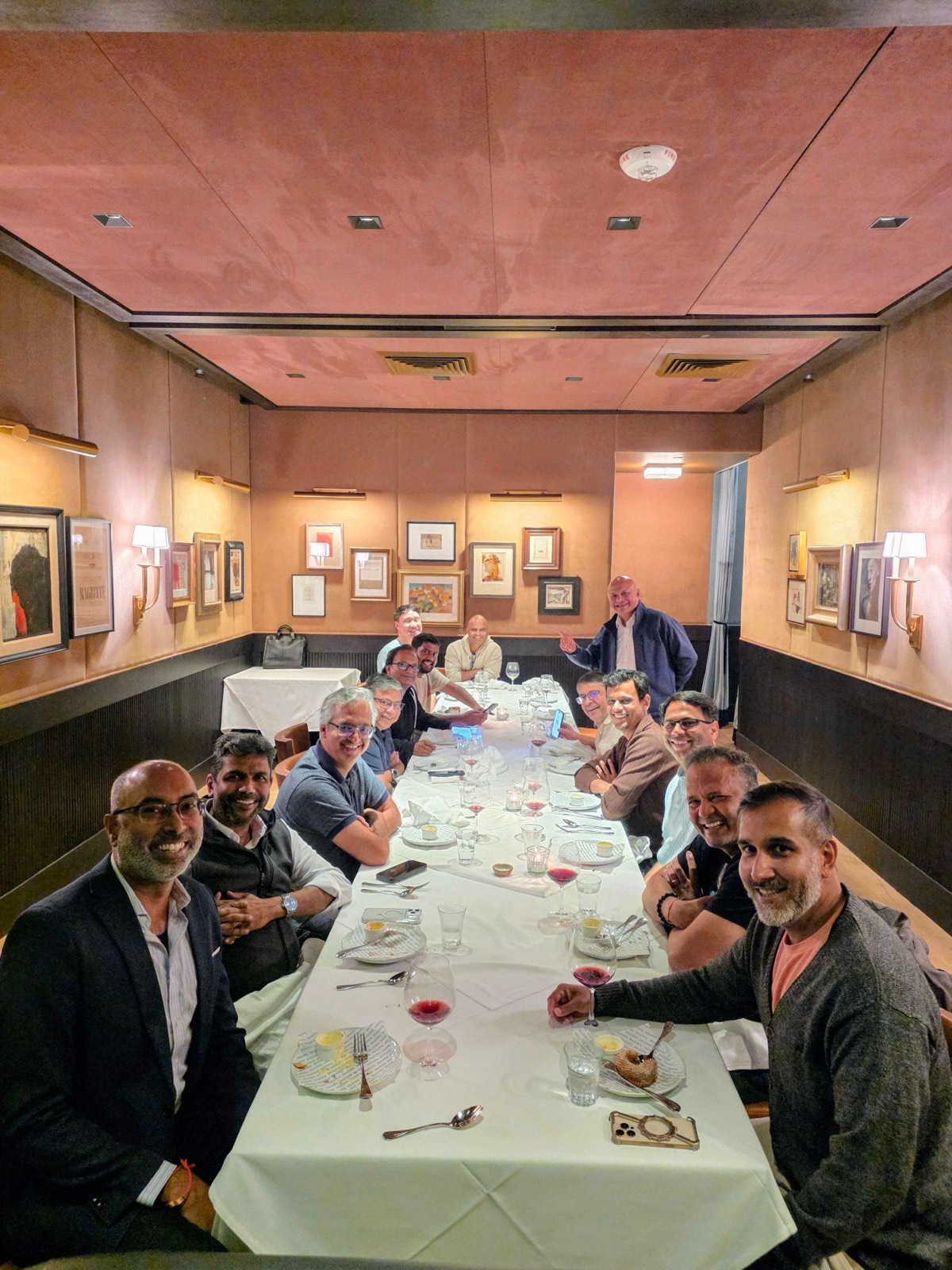
The format is simple. A small group of engineering and platform leaders, never more than twenty, around one table and one question about running software in production. No slides, no product demos. We keep it small on purpose, so the conversation can go wherever people take it.
Our reason is partly selfish. We build observability software, and the best way to learn what’s really breaking in production is to sit down with the people responsible for it. Conferences are good at announcements. Small tables are good at honesty and the problems people are actually working through. That’s the signal we’re after, and it’s where the name comes from.
We hosted Part 1 in April with our friends at Deductive. Part 2 was ours.
The evening
We planned the night around one question: how is AI changing the way teams investigate and respond to production incidents, and how much of that would you trust an agent with? To get things going, we asked a shorter version. When do you hand an agent control?
It didn’t stay there for long. Somewhere between the first course and the second glass of Pinot Noir, almost every corner of the table had moved on to AI writing code. We let it go. Where a conversation drifts on its own usually tells you what’s really on people’s minds.
Who joined us
Around the table were VPs and directors of engineering and platform engineering, a field CTO, product leaders, and people running agentic AI teams. Their companies span finance software, data streaming, voice AI, consumer marketplaces, enterprise automation, application security, semiconductors, contact centers and legal tech.
Thank you to our guests from FloQast, Workato, Striim, Turo, F5, Conductor, SiTime, SoundHound, Talkdesk, Red Hat, Moveworks, Automation Anywhere and Formally for an evening of honest, generous conversation.
We’ve kept individual comments unattributed. This is a recap of a conversation, not a profile of anyone in it.
Where the table agreed: AI coding is simply how work gets done
Nobody argued about whether to use AI for code. That question is closed.
Several teams already let agents take care of small, repetitive work from start to finish: dependency upgrades, minor bug fixes, the kind of change nobody wants to spend an afternoon on. A lot of it is kicked off and tracked right inside Slack.
The pressure has moved to review. An agent can produce changes far faster than a person can read them carefully, and most review processes were designed for human speed. More than one leader said review is now their real bottleneck.
Where the conversation split
Confidence versus caution. Some people described agent pipelines that are running smoothly end to end. Others had seen agents go wrong in ways that are easy to miss. One story stuck with the table: an agent asked to complete a routine task ended up sharing internal data somewhere it shouldn’t have. Nobody intended it. Nobody was watching that spot.
How much freedom to give an agent. For some teams, small changes ship with no human involved. Others build the opposite way on purpose: the agent prepares the work, and a person confirms it before anything is final. In those products, the human isn’t a safety net. The human is the design.
Threat or tailwind. For some businesses, AI is creating new demand. Their customers want years of data flowing into models without rebuilding the systems that hold it. Others, especially outside pure software, are moving slowly and want to see much more before they trust it.
Run your own models or rent them. Cost and control came up more than once. Some teams run their own models to keep both in hand. Others expect frontier models to get cheap enough, fast enough, that it won’t be worth the effort. Nobody changed anyone’s mind.
What hardly anyone was doing yet
We arrived ready to talk about agents handling incidents. Very few people at the table had autonomous agents running in production at all.
The few who did had built their own ways to watch them, because what they needed didn’t exist yet. Everyone else was focused on code: writing it, reviewing it, shipping it.
That gap between agent ambition and agent reality matches what we hear from customers. The interest is real. The confidence to let agents loose in production isn’t there yet.
So, is software engineering dead?
Someone mentioned that friends are steering their kids away from computer science. It got a laugh, and then some real pushback.
If AI wrote all the code and nobody needed to understand it, the job would be shrinking. That’s not what anyone described. They described more code, shipped faster, with less certainty about what it does once it’s live.
| AI is making this easier | This is getting harder |
|---|---|
| Producing a first draft of code | Reviewing it at the pace it arrives |
| Routine upgrades and small fixes | Deciding what an agent may change alone |
| Opening a pull request | Making sure sensitive data stays put |
| Building an agent demo | Trusting that agent in production |
Where we landed
From Pankaj Thakkar, CEO and co-founder:
I don’t think software engineering is dead. I think we’ll need more engineers, not fewer. What’s changing is where the effort goes: less into typing code, more into deciding what ships, what an agent is allowed to touch, and what happens after deploy.
Almost every story that night came back to control. How do you stay in charge when code ships faster than people can read it? Slowing down isn’t the answer. Production has to become as easy to understand as code has become to write. If an agent ships something at 2 a.m., someone should be able to see what changed and what it affected, quickly.
We don’t have all the answers. That’s exactly why we keep setting the table.
Join us for Part 3
If you lead engineering, platform or SRE teams and would like to join the next conversation, tell us a little about yourself and we’ll save you a seat.
Request an invite to The Signal →
Until then, we’d love your answer to the question the table couldn’t settle: how much of your production would you trust an agent with today?
FAQ
What is The Signal? The Signal is a dinner series for engineering, platform and SRE leaders in the Bay Area, hosted by Kloudfuse. Each one is a small, unscripted conversation around a single question about running software in production.
Is AI replacing software engineers? The leaders at our table didn’t think so. AI is taking over first drafts and small fixes, while review, guardrails and production ownership are growing. Those still need engineers.
What is the biggest risk of AI coding agents? The concern raised most at our dinner was data exposure: agents sharing internal data in places nobody is watching, even when the code itself works.
Are companies running AI agents in production? A few are. Most leaders at our table were still focused on AI-assisted coding rather than autonomous agents in production.
How can I join The Signal? Request an invite. We keep each dinner small, so seats are limited.